The Future of VR and AR is honestly one of those things that excites almost everyone who’s into tech. If you’ve been following gadgets and innovations (like we do at Technical Dudes), you’ve probably noticed how fast VR headsets and AR apps are popping up everywhere. From gaming to online shopping, and even in schools and hospitals, this tech is already changing the way we live.
But here’s the real question: what’s next? Where will VR (Virtual Reality) and AR (Augmented Reality) take us in the next five years? Let’s break it down in simple words.
The Gear Will Get Lighter and Better
If you’ve ever worn a VR headset for more than half an hour, you know the struggle—heavy, sweaty, and sometimes a little uncomfortable. The next five years are going to change that. Headsets will get lighter, sleeker, and more like normal glasses.
Think about AR glasses that don’t make you look like a cyborg but just blend in with your everyday outfit. That’s where the future of VR and AR is headed. And honestly, that’s when people will start using them daily instead of just for fun.
Smarter Tech Thanks to AI
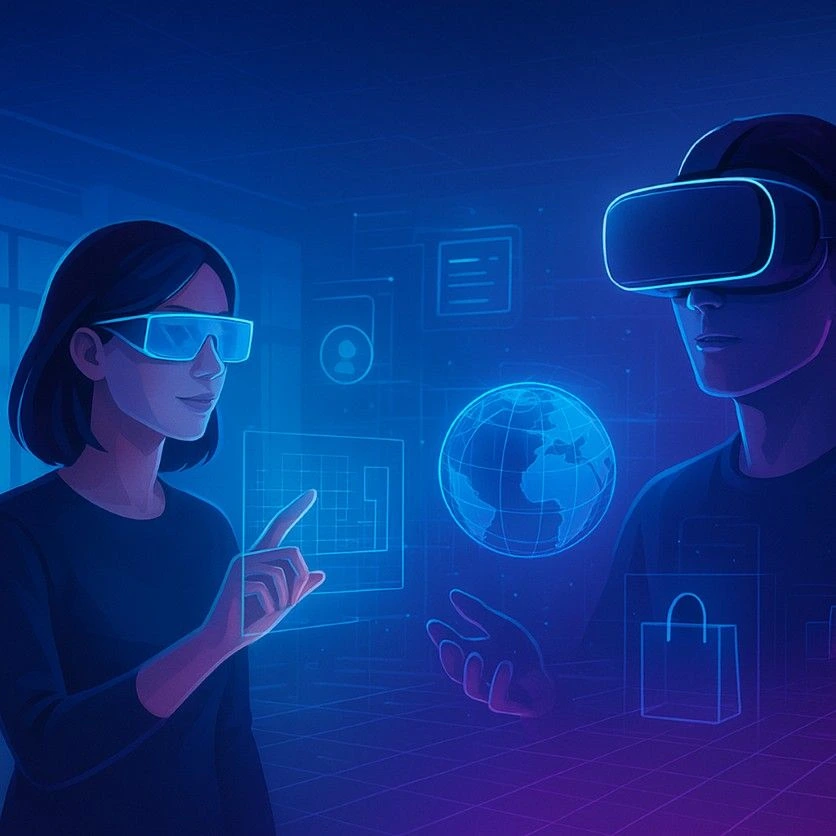
Now, add AI into the mix and things get really interesting. Imagine wearing AR glasses that show you live directions, highlight offers while you shop, or translate signs when you travel.
VR could adapt to your mood—like, if you’re stressed, it might drop you into a calm virtual beach instead of a noisy game. This is not just wishful thinking. It’s exactly the kind of thing big tech companies are already building.
At Technical Dudes, we believe the real magic will come when VR, AR, and AI work together to create personalized experiences.
Changing Classrooms and Hospitals
The future of VR and AR isn’t just fun and games. Teachers will use VR to take students on virtual trips—imagine learning history by “walking” through ancient Rome instead of reading about it in a textbook.
Doctors will use AR to see 3D versions of scans during surgery. Therapists might treat phobias by letting patients slowly face their fears in a safe virtual environment. It sounds futuristic now, but it’s already starting to happen.
Work Will Feel Different
Let’s be honest—Zoom meetings are boring. But what if, instead of staring at tiny boxes on a screen, you and your team could meet in a VR office? You’d have avatars, virtual whiteboards, and the feeling of actually being “there” together.
AR could also make remote teamwork easier. For example, engineers in different countries could work on the same 3D model by looking at it through their AR glasses. That’s where the future of VR and AR will make a real difference.
Entertainment and Shopping Are About to Level Up
This part is exciting. In the next five years, instead of watching your favorite singer on YouTube, you might attend their VR concert sitting right in your living room.
Shopping will change too. You’ll try clothes, makeup, or furniture in AR before buying. No more “does this fit?” or “will this sofa look good in my room?”—you’ll see it for yourself before hitting purchase.
A Step Toward the Metaverse
Everyone’s been throwing around the word “metaverse.” The truth is, it’s still early days. But whether it turns into one big virtual world or smaller specialized spaces, the future of VR and AR will be the foundation of it. Work, play, shopping, and hanging out could all move into blended digital spaces.
Of Course, There Are Challenges
We shouldn’t ignore the problems. VR still causes motion sickness for some. Devices are expensive. AR has privacy risks (do you really want your glasses recording everything?). But here’s the thing—every new technology faces issues in the beginning. Over the next five years, these will improve just like smartphones did when they first came out.
Final Thoughts
So, what can we expect in the next five years? The future of VR and AR will be lighter, smarter, and far more useful than today. It won’t just be a toy for gamers—it’ll become a tool for learning, working, shopping, and living.
Here at Technical Dudes, we’re pretty sure that in just a few years, VR headsets and AR glasses will be as normal as carrying a smartphone. And honestly, we can’t wait to see that happen.